Product details description
Hex bolts are the most common fasteners in structural engineering, but the
specific style of the head—and the nut configuration—drastically alters the tool
access, torque application, and load-bearing capacity of the joint. The
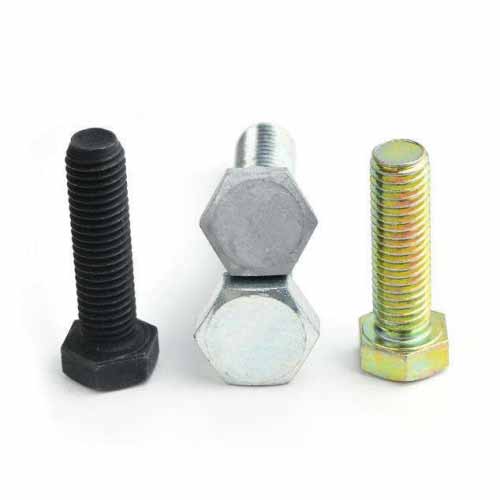
"Standard Hex" head, defined by ASME B18.2.1, is the baseline for most general
applications. It is designed to be driven by a wrench or socket that fits across
the flats, providing a balance between contact surface area and tool clearance
in tight spaces. The height of a standard hex head is typically about two-thirds
the bolt diameter, which allows for sufficient thread engagement while keeping
the profile low enough to avoid snagging or protruding excessively.
The "Heavy Hex" head and nut configuration represents an upgrade for
high-strength, high-pressure environments, commonly found in bridge construction
and heavy machinery. Defined by ASME B18.2.2, the heavy hex has a larger width
across the flats and a greater height than the standard version. This increased
surface area allows for higher torque application without rounding off the
corners of the fastener. Crucially, heavy hex bolts are often used with
high-strength structural bolts (like ASTM A325 or A490) where pre-tensioning is
critical. The larger bearing surface helps distribute the clamping force over a
wider area of the connected material, reducing the risk of localized crushing or
deformation under heavy loads.
Jam nuts are a distinct configuration used primarily for locking and
preventing loosening due to vibration, rather than for bearing heavy structural
loads alone. A jam nut is a thin nut that is tightened against a standard or
heavy hex nut. By clamping the two nuts together, the threads are deformed
slightly, creating friction that resists rotation. This creates a "prevailing
torque" that keeps the assembly secure even if the main nut experiences dynamic
loading. In applications involving heavy hex bolts, a jam nut is often used on
the opposite end of the thread to lock the bolt in place when only one side of
the joint is accessible to the wrench.
Material selection plays a pivotal role in how these head styles perform
under stress. Standard hex bolts are often made from low-carbon steel (Grade 2)
or medium carbon steel (Grade 5), while heavy hex configurations typically
require quenched and tempered alloy steel to handle the immense torque required
for installation. The hardness of the steel must match the nut grade; using a
standard nut on a heavy hex bolt can lead to thread stripping because the nut’s
internal threads cannot withstand the pressure exerted by the larger bearing
surface of the heavy head. Furthermore, corrosion-resistant coatings like
hot-dip galvanizing are applied differently based on the head style, with heavy
hex nuts often requiring a tap-over-size tap to ensure threads remain functional
after the coating process.
Tool accessibility is a major design constraint that dictates the choice
between standard and heavy hex. In automotive or aerospace applications, where
space is at a premium, standard hex heads are preferred because they require
less swing arc for a wrench. Conversely, in civil infrastructure, where massive
wrenches or impact tools are used, the bulkier heavy hex is advantageous because
it allows for greater leverage. The "wrench size" (width across flats)
determines the tool required; a 1/2-inch standard hex takes a 3/4-inch wrench,
whereas a 1/2-inch heavy hex takes a 7/8-inch wrench. This difference
necessitates careful planning during the design phase to ensure that maintenance
crews have the correct tooling for the specific bolt configuration
installed.
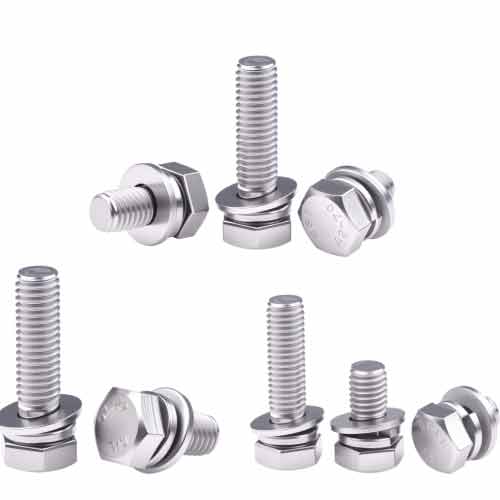
Finally, the interaction between the bolt head, the nut, and the washer is
essential for joint integrity. For heavy hex applications, hardened washers are
mandatory to further distribute the load and protect the mating surface from the
high torque during tightening. When using jam nuts, the sequence of tightening
is critical: the primary nut is tightened to the required torque, and then the
jam nut is run down tight against it to lock it in place. Improper sequencing
can render the locking mechanism ineffective. Understanding these nuances—from
the geometry of the head to the metallurgy of the thread—ensures that the chosen
fastener configuration delivers the intended structural performance and safety
factor.
Previous article:
The Role of Hex Bolts in Structural Engineering
Next article:
Heavy Hex Bolts - Thicker Head & Bearing Surface for Structural Use