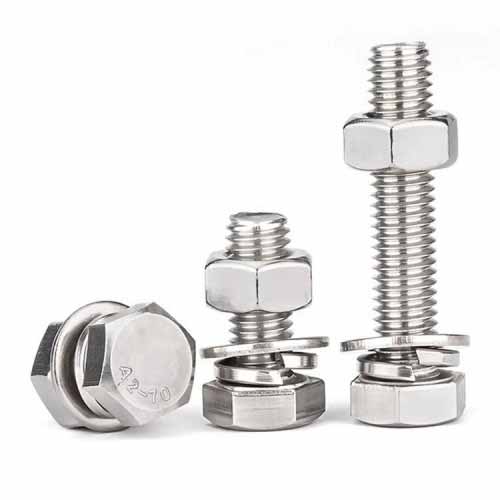
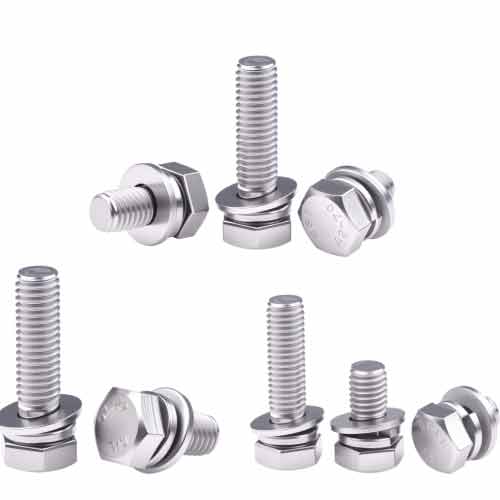
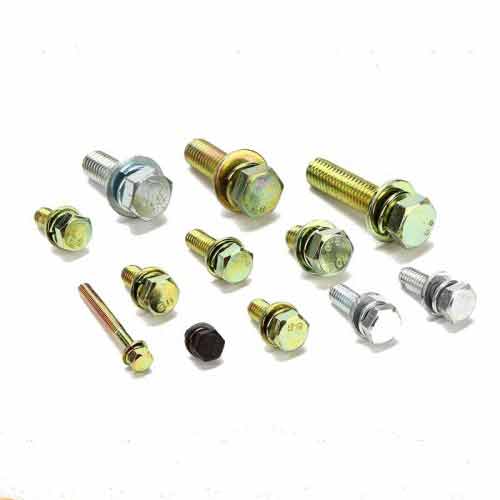
Product details description
Accurate measurement of hex bolts is critical for ensuring structural
integrity and proper fit in mechanical assemblies, yet it is often done
incorrectly by relying solely on visual estimation. The most important dimension
is the diameter, which refers to the shank size, not the head. To measure this
correctly, you must use a caliper or a micrometer to measure the smooth shank
just below the head, as the threaded portion is slightly smaller due to the
cutting of the helix. Measuring over the threads will result in an inaccurate,
smaller reading that could lead to selecting the wrong nut or hole size.
The length of a hex bolt is the second most common point of confusion,
particularly with countersunk or round head variants. For standard hex head
bolts, the length is measured from under the head to the end of the shank.
However, for countersunk (flat head) bolts, the length is measured from the top
of the head to the end, because the head sits flush with or inside the material.
A common mistake is measuring the entire height of the head, which adds
unnecessary length and can result in a bolt that is too long to tighten properly
or bottom out before creating sufficient clamping force.
Thread pitch is a subtle but vital dimension that determines compatibility
with the mating nut or tapped hole. In the metric system, this is measured in
millimeters (e.g., M8 x 1.25), while in the imperial system, it is measured in
threads per inch (TPI). You cannot accurately gauge pitch by eye; a thread pitch
gauge is required to match the ridges of the bolt to the correct notch on the
gauge. Confusing a coarse thread (standard) with a fine thread can lead to
stripped threads or a connection that lacks the necessary tensile strength for
the application.
Another often-overlooked dimension is the width across the flats (WAF),
which determines the wrench size needed for installation. While this usually
correlates with the bolt diameter, variations exist between DIN, ISO, and SAE
standards. Using the wrong wrench size can round off the corners of the hex
head, rendering the bolt impossible to tighten or loosen in the future. It is
essential to measure the flat-to-flat distance with a caliper if you are working
with non-standard or vintage hardware where nominal sizes may not apply.
Finally, material grade and coating thickness can sometimes interfere with
precise measurement, especially in tight-tolerance applications. If a bolt is
heavily galvanized or plated, the added thickness can push the diameter over the
maximum limit for a specific hole class (e.g., making a bolt fit a snug hole
rather than a standard clearance hole). When measuring for critical fits, it is
wise to measure the plain, uncoated shank if possible, or account for the
plating thickness in your tolerance calculations to ensure assembly without
forcing the components together.
Previous article:
How to Choose the Right Hex Bolt for Your Project
Next article:
Hot-Dip Galvanized Hex Bolts: Weather Resistance and Marine Environment Performance