Stainless Steel Infrastructure Projects Hex Bolt for Marine Use
Release time:2026-01-18 Click:19
Marine infrastructure projects demand fastener solutions that withstand the relentless assault of saltwater corrosion, humidity, and atmospheric salts that degrade conventional materials within years of installation. Stainless steel hex bolts engineered specifically for marine applications provide the corrosion resistance and mechanical strength necessary for docks, piers, bridges, and coastal facilities where fastener failure could compromise structural integrity. The chromium-rich alloy composition of marine-grade stainless steel, typically meeting ASTM B8 or similar specifications, creates a passive oxide layer that self-heals when scratched, providing ongoing protection against the pitting and crevice corrosion that destroys lesser materials in marine environments. This metallurgical foundation enables stainless hex bolts to maintain their clamping force and structural contribution throughout the decades-long service life that critical infrastructure requires.
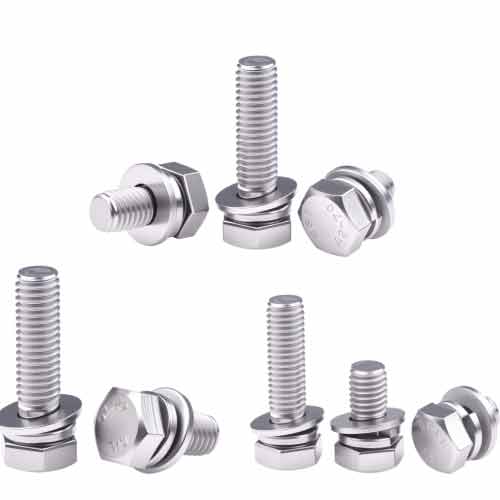
The mechanical specifications of marine infrastructure hex bolts address the substantial load requirements that heavy construction and continuous environmental exposure impose. Heavy hex head configurations provide greater bearing surface area than standard hex bolts, distributing clamping forces more effectively and reducing the risk of fastener loosening under vibration and thermal cycling. Coarse thread series offer faster assembly and greater resistance to cross-threading during installation, while the hex drive configuration accommodates standard tools familiar to construction personnel. Material grade selection, typically Type 316 stainless steel for severe marine environments or Type 304 for less aggressive applications, allows engineers to specify appropriate corrosion resistance without unnecessary cost premium. These mechanical characteristics ensure that stainless hex bolts deliver reliable performance in the demanding conditions that marine infrastructure construction and operation present.
Installation and maintenance considerations for marine stainless hex bolts influence long-term performance and lifecycle costs in ways that distinguish quality fastener programs from cost-cutting approaches. Proper torque specifications must account for the galling tendency of stainless steel threads, requiring appropriate lubrication and controlled tightening procedures that prevent thread damage during assembly. Dissimilar metal considerations require attention to galvanic corrosion risks when stainless bolts contact other metallic components, potentially necessitating isolation washers or other barrier methods to prevent accelerated deterioration. Regular inspection programs that identify developing corrosion or fastener loosening enable proactive maintenance that prevents the sudden failures that could compromise safety or operational continuity. Infrastructure owners who specify and maintain marine-grade stainless hex bolts according to best practices establish fastening systems that support safe, reliable coastal and marine facilities throughout their design service life.
Previous article:The Critical Role of the Quill Bolt in Mechanical Assembly
Next article:The Unsung Hero of Construction: The Bolt Screw
Hot products
Mobile: +86 15369229308
Email:metalproducts2025@163.com
Email:565169797@qq.com