Product details description
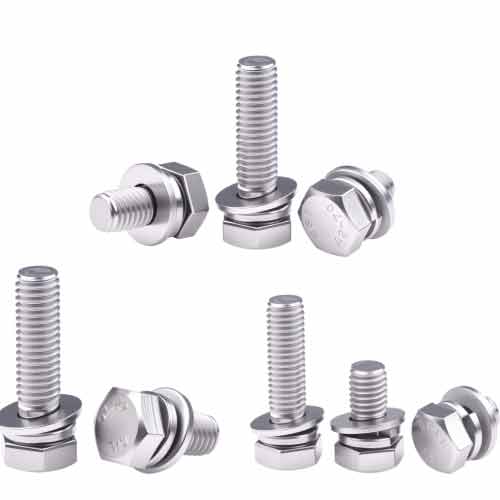
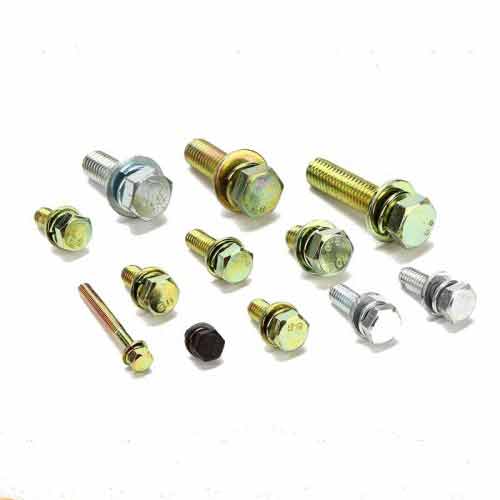
A hex bolt flange is a critical fastening component designed to enhance
joint stability in mechanical and structural applications. Featuring a hexagonal
head for wrench engagement and a circular flange at the base, this bolt
distributes load over a wider area compared to standard bolts, reducing stress
concentration on connected materials. Typically made from alloy steel or
stainless steel, it resists corrosion and high torque, making it ideal for
automotive assemblies, machinery mounts, and construction frameworks. The
flange’s flat surface also acts as a washer, eliminating the need for separate
components and streamlining installation.
The versatility of hex bolt flanges shines in heavy-duty scenarios. In
automotive engines, they secure cylinder heads to blocks, withstanding
vibrations and thermal expansion. In bridge construction, they fasten steel
beams to concrete foundations, ensuring structural integrity under dynamic
loads. For machinery, they attach motors to frames, preventing misalignment
during operation. Grades like Grade 8.8 or 10.9 indicate tensile strength (e.g.,
800 MPa for Grade 8.8), guiding selection based on load requirements. Surface
treatments such as zinc plating or black oxide further enhance corrosion
resistance in harsh environments.
Proper installation of hex bolt flanges involves precise torque application
using calibrated wrenches to avoid over-tightening (which can strip threads) or
under-tightening (leading to joint failure). Thread-locking adhesives may be
used for vibrating applications. Regular inspection for flange deformation or
bolt stretch ensures ongoing reliability. By combining mechanical strength with
load distribution, hex bolt flanges become indispensable for creating durable,
secure connections in engineering systems.
Previous article:
Heavy Hex Bolts - Thicker Head & Bearing Surface for Structural Use
Next article:
Hex Bolts vs. Carriage Bolts: Which One to Use?