Selecting Hex Bolt Screw Systems for Heavy-Duty Applications
Release time:2026-02-25 Click:12
The mechanical fastening of structural components, machinery assembly, and equipment installation relies heavily on threaded fasteners that provide reliable clamping force and resistance to vibrational loosening. Hex bolt screw systems represent one of the most widely used fastening solutions in industrial, commercial, and residential applications, offering excellent torque transmission, reliable clamping force, and availability in sizes and materials for virtually any fastening requirement. Understanding hex bolt specifications and selection criteria enables engineers, contractors, and DIY enthusiasts to achieve secure, long-lasting assemblies in their projects.
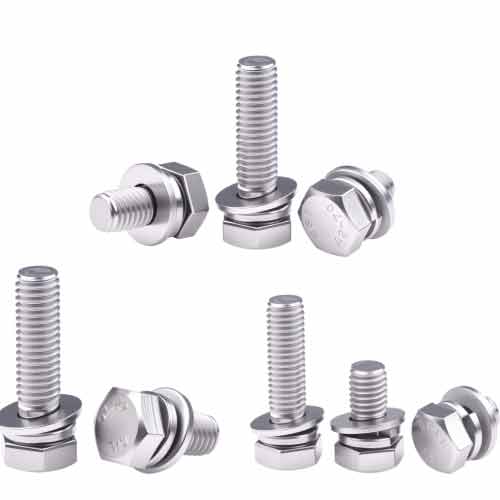
The design of hex bolt screw fasteners incorporates several features that contribute to their widespread adoption in fastening applications. The hexagonal head provides multiple engagement surfaces for wrenches and sockets, enabling high torque transmission during installation without camming out or damaging the fastener. The threaded shaft creates the clamping force when mated with compatible nuts or tapped holes, with thread pitch determining the relationship between rotation and linear movement. The unthreaded shank between the head and threads provides a bearing surface and prevents stress concentration in the clamped material.
Material specifications for hex bolt screw fasteners determine their strength, corrosion resistance, and suitability for different service environments. Carbon steel bolts offer economical strength for general-purpose applications, with grades including Grade 2, Grade 5, and Grade 8 indicating different strength levels based on chemical composition and heat treatment. Stainless steel bolts provide corrosion resistance for outdoor, marine, and chemical environments, with austenitic grades like 18-8 offering good strength and excellent corrosion resistance. Specialty alloys including silicon bronze and monel provide enhanced corrosion resistance for marine and specialized industrial applications.
Coating and finish options for hex bolt screw fasteners address both corrosion protection and appearance requirements for different applications. Zinc plating provides economical corrosion resistance for indoor and mild outdoor environments, with clear, yellow, and black zinc options available for different aesthetic requirements. Hot-dip galvanizing provides thick, durable zinc coatings for severe outdoor and corrosive environments. Black oxide finishes provide modest corrosion resistance and attractive dark appearance for consumer products and machinery. Parkerizing and other conversion coatings provide additional corrosion protection for military and aerospace applications.
Thread specifications for hex bolt screw fasteners follow established standards that ensure compatibility between fasteners from different manufacturers. Unified National Thread standards govern thread dimensions in the United States, with coarse and fine thread series providing different options for different applications. Metric thread standards govern fastener dimensions in most of the world, with coarse and fine thread pitches specified for different strength and adjustment requirements. Thread tolerance classes specify the fit between mating threads, with Class 2A and 2B being most common for general-purpose applications.
Installation considerations for hex bolt screw fasteners significantly influence the performance and longevity of fastened assemblies. Proper torque selection ensures adequate clamping force without exceeding the tensile strength of the fastener. Lubrication reduces friction during installation, enabling more accurate torque transmission and preventing galling in high-strength fasteners. Washer selection distributes clamping forces and protects bearing surfaces, with flat washers, lock washers, and spring washers serving different purposes. Thread lockers including anaerobic compounds and patch lockers prevent loosening from vibration in critical applications.
Quality verification for hex bolt screw fasteners ensures that installed fasteners meet the specifications required for safe, reliable assemblies. Visual inspection identifies manufacturing defects, coating damage, and thread irregularities that may affect performance. Dimensional verification using go/no-go gauges and thread ring/pitch gauges confirms that fasteners meet tolerance specifications. Mechanical testing including tensile testing, proof loading, and hardness testing verifies that fasteners meet strength requirements specified by grade or specification.
Previous article:Precision Fastening: The Role of a Hex Bolt Socket in Toolkits
Next article:Achieving Secure Fastening with Versatile t bolt
Hot products
Mobile: +86 15369229308
Email:metalproducts2025@163.com
Email:565169797@qq.com