Corrosion-Resistant Equipment Hex Bolt for Marine & Coastal Equipment
Release time:2026-02-22 Click:12
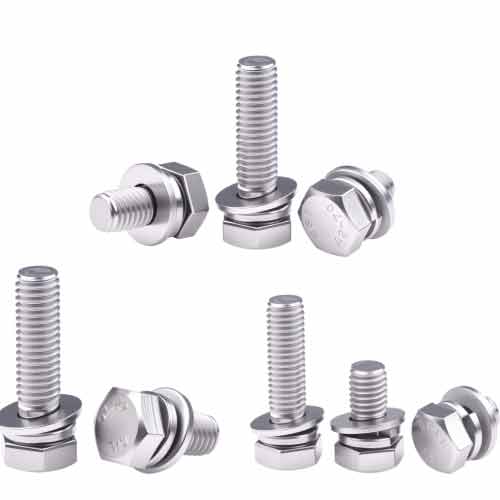
Marine and coastal environments pose severe challenges to fastening components due to constant exposure to salt-laden air, high humidity, and intermittent seawater contact, making corrosion-resistant equipment hex bolts indispensable for reliable assemblies. These bolts are typically precision-manufactured from medium-carbon or alloy steel, then subjected to hot-dip galvanizing, where the entire surface—including the head, thread, and undercuts—is coated with a metallurgically bonded layer of zinc. This sacrificial zinc layer protects the steel substrate from oxidation, ensuring that even if the surface is scratched or chafed, surrounding zinc continues to provide protection.
Advanced manufacturing may incorporate supplementary coatings for extreme conditions. Duplex systems pair hot-dip galvanizing with epoxy powder or polyurethane topcoats, sealing out chlorides and offering superior resistance to UV radiation and abrasion. Threads are rolled post-galvanizing to preserve dimensional accuracy and strength, while chamfered edges reduce stress concentrations that could initiate corrosion fatigue. The result is a bolt that maintains mechanical integrity and clamping force over years of exposure to harsh marine atmospheres.
Applications span shipbuilding, offshore platforms, desalination plants, and coastal infrastructure. In boat hulls and deck fittings, these bolts secure critical components against vibrational loosening and cyclic loading. On piers and harbor equipment, they resist the combined assault of saltwater spray and windborne sand. For renewable energy installations such as offshore wind turbines, they provide durable fastening in towers and nacelle assemblies. Their reliability reduces maintenance interventions and extends service intervals dramatically.
Installation best practices are vital to preserve performance. Proper torque specifications must be observed to avoid over-compression of threads, which can lead to galling or reduced corrosion protection. When cutting or drilling is necessary, field-reapplication of zinc-rich paint or cold galvanizing compound restores the protective barrier. Fastener mating parts should also be corrosion-resistant—stainless steel or galvanized washers and nuts—to prevent galvanic corrosion cells. Routine inspection focuses on detecting coating damage and ensuring bolt tension remains within specification.
By selecting corrosion-resistant equipment hex bolts, engineers and marine operators invest in a small component that delivers outsized reliability in hostile environments. These bolts ensure structural assemblies stay secure, reduce downtime for repairs, and lower lifecycle costs. For any marine or coastal equipment assembly, they are a fundamental safeguard of operational continuity and safety.
Previous article:Large Diameter Infrastructure Projects Hex Bolt
Next article:Weatherproof Bridges Hex Bolt Reliable In All Climate Conditions
Hot products
Mobile: +86 15369229308
Email:metalproducts2025@163.com
Email:565169797@qq.com