Heavy Duty Bridges Hex Bolt For Major Bridge Constructions
Release time:2026-02-20 Click:13
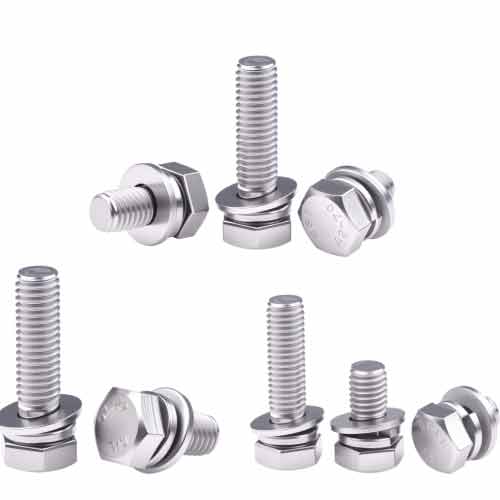
Heavy duty bridge hex bolts represent the critical fastening components that structural engineers specify for major bridge construction projects where safety, durability, and load-bearing capacity cannot be compromised. These specialized fasteners differ substantially from standard hex bolts used in general construction, incorporating enhanced material properties, precise dimensional tolerances, and rigorous quality control measures that ensure reliable performance under the extreme stresses that bridge structures experience throughout their service lives. The selection of appropriate hex bolts for bridge applications involves careful consideration of factors including tensile strength requirements, fatigue resistance, corrosion resistance, and compliance with the various domestic and international bridge construction standards that govern structural fastener specifications. Major bridge projects including highway overpasses, railway bridges, and pedestrian suspension structures all depend upon the reliable performance of heavy duty hex bolts to maintain structural integrity under dynamic loading conditions.
The material science underlying heavy duty bridge hex bolt performance involves sophisticated metallurgical processes that produce steel with the precise properties that bridge applications demand. Grade A325 and A490 bolts represent the most common specifications for structural bolted connections in North American bridge construction, with A325 providing minimum tensile strengths of 120 ksi for diameters up to one inch and A490 offering 150 ksi tensile strength for higher-demand applications. European bridge construction typically specifies grade 8.8, 10.9, and 12.9 bolts with comparable strength requirements expressed in metric measurements. The heat treatment processes that develop these strength levels must be carefully controlled to achieve the desired hardness and toughness balance—hardness levels that are too high create brittleness while insufficient hardness compromises load-carrying capacity. Quality bolts undergo rigorous testing including tensile testing, hardness verification, and magnetic particle inspection to detect surface discontinuities that could compromise performance.
The dimensional specifications for bridge hex bolts reflect the precise engineering requirements that structural connections demand for predictable load distribution across bolted joint assemblies. Thread specifications must maintain consistent pitch diameters and thread forms that ensure proper engagement with mating nuts while permitting assembly without excessive friction or binding. The tolerance ranges for critical dimensions including shank diameter, thread length, and head thickness directly impact the fit and function of bolts within engineered connections. Heavy hex head designs provide larger bearing surfaces than standard hex heads, distributing clamping forces more effectively across connected material surfaces and reducing the potential for load concentration that could cause bearing failures. The introduction of vibration-resistant locking mechanisms including prevailing torque nuts, interference-type thread inserts, and direct tension indicators addresses the fatigue concerns that cyclic loading creates in bridge structures.
Installation procedures for heavy duty bridge hex bolts require specialized tools and trained personnel who understand the importance of achieving proper preload in structural bolted connections. The turn-of-nut method, calibrated wrench tightening, and direct tension indicator techniques each provide reliable approaches for achieving the specified bolt preload that ensures clamped joint integrity. The calibration of installation equipment against certified instrumentation verifies that torque or tension measurements accurately reflect actual bolt preload levels. Inspection procedures including verification of proper lubrication, observation of installation technique, and post-installation testing confirm that installed bolts meet the performance requirements that bridge designers specify. The importance of proper installation cannot be overstated, as inadequately tensioned bolts may loosen under service loading while over-tightened bolts may experience reduced fatigue capacity or tensile failure.
The quality assurance frameworks governing heavy duty bridge hex bolt procurement and installation reflect the critical safety implications that structural fastener performance carries for public infrastructure. Manufacturer certifications documenting material compliance, heat treatment processes, and testing results provide the documentation that project specifications and regulatory agencies require. Third-party testing laboratories independent of manufacturers perform verification testing on sample lots to confirm that supplied bolts meet specification requirements. The traceability requirements that bridge projects impose enable tracking of individual bolts or lot numbers back to manufacturing records, supporting root cause analysis if any performance issues emerge during service. These comprehensive quality assurance measures, while adding cost and complexity to procurement processes, protect the substantial investments that bridge construction represents and ensure the public safety that reliable structural connections provide.
Previous article:High Strength Hex Bolt Manufacturing Processes
Next article:Large Diameter Infrastructure Projects Hex Bolt
Hot products
Mobile: +86 15369229308
Email:metalproducts2025@163.com
Email:565169797@qq.com