The Role of Quill Bolt in Mechanical Connections
Release time:2026-02-13 Click:9
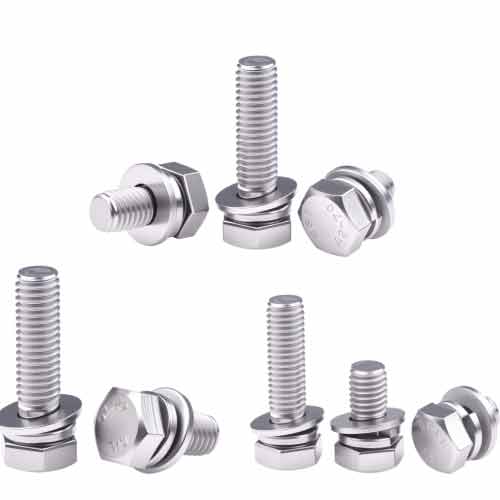
A quill bolt, distinguished by its integrated quill (a hollow sleeve or bushing), is a specialized fastener designed to reduce friction and allow rotational or sliding movement in mechanical assemblies. Unlike standard bolts, it combines a threaded shaft with a smooth, cylindrical quill that fits into a corresponding hole, enabling parts to pivot or adjust without binding. This unique design makes it indispensable in applications where precision, flexibility, and reduced wear are critical, from fine machinery to furniture engineering.
The structure of a quill bolt centers on its quill and threaded body. The quill, typically made of hardened steel or bronze, is machined to tight tolerances to minimize clearance, ensuring smooth motion. The threaded end, often paired with a nut, secures the bolt to a stationary component, while the quill interfaces with a moving part. Materials range from stainless steel (for corrosion resistance) to alloy steel (for high-strength applications), with coatings like zinc or nickel to enhance durability.
Applications of quill bolts span diverse industries. In woodworking, they allow cabinet doors to swing smoothly on hinges, with the quill reducing friction between the hinge pin and plate. In automotive engineering, they connect suspension components, accommodating slight misalignments. Machinery like 3D printers uses quill bolts for precise axis movement, while office chairs rely on them for adjustable height mechanisms. Even musical instruments, such as piano actions, employ quill bolts for responsive key movement.
Advantages of quill bolts include their ability to reduce wear and enable fine adjustments. The quill’s smooth surface minimizes metal-to-metal contact, extending the life of both the bolt and the mating parts. They also allow for angular or linear misalignment (up to 2–3 degrees), making them ideal for imperfect assemblies. Compared to bearings, they are simpler and more compact, fitting into tight spaces where rotating parts are needed.
Maintenance of quill bolts focuses on lubrication and wear inspection. The quill should be periodically greased with lithium-based lubricant to maintain smoothness. Inspect for scoring or grooving on the quill surface, which indicates excessive friction and requires replacement. Ensure the threaded end remains tight, as loosening can cause misalignment. For high-use applications, upgrading to self-lubricating bushings within the quill can further reduce maintenance.
In summary, the quill bolt is a testament to engineering ingenuity, merging fastening strength with mechanical flexibility. Its ability to facilitate precise motion while minimizing wear makes it a cornerstone in designs where reliability and adjustability are paramount.
Previous article:Durable Hex Bolts for Furniture Assembly
Next article:Installation Guidelines for Socket Head Cap Screw in Heavy Machinery
Hot products
Mobile: +86 15369229308
Email:metalproducts2025@163.com
Email:565169797@qq.com